
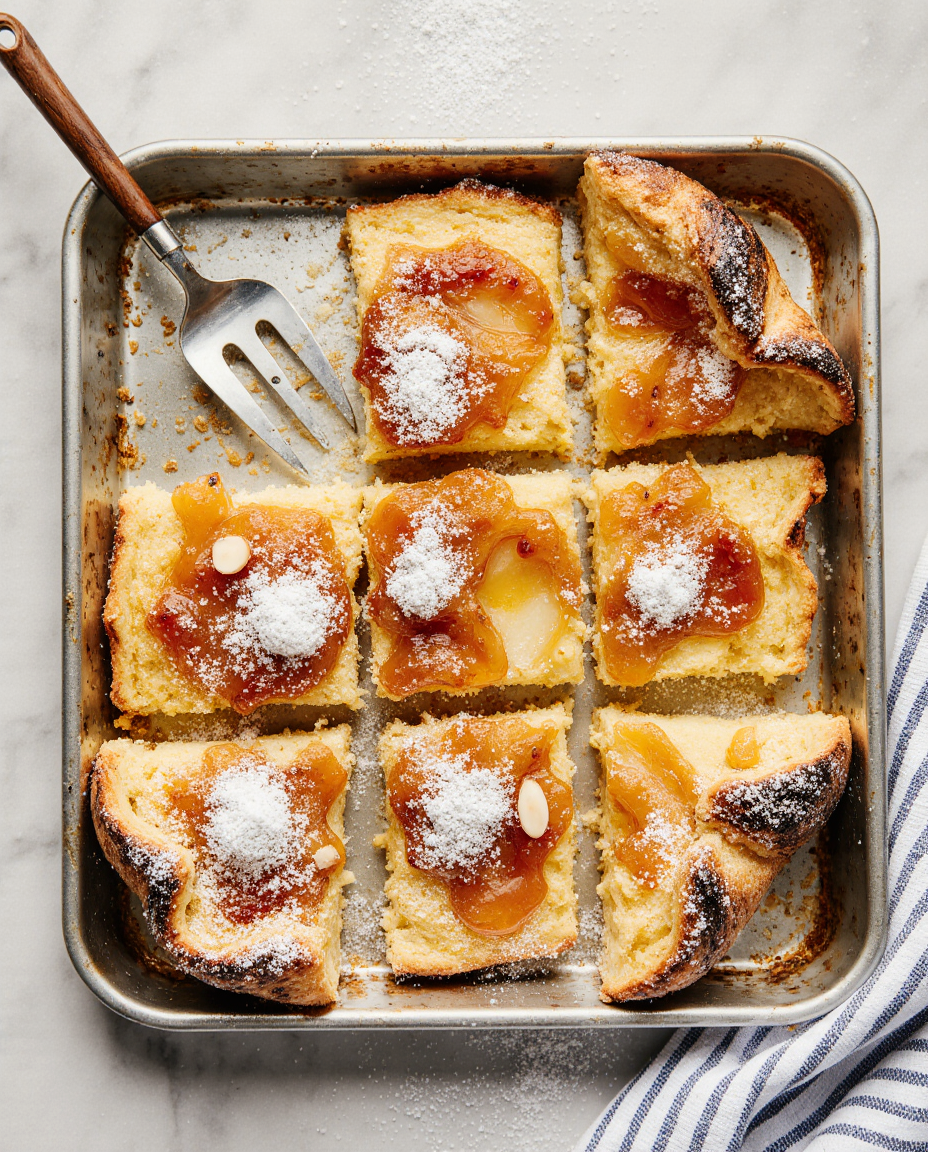
The Dutch Baby Pancake is a show-stopping breakfast classic that puffs dramatically in the oven, creating crisp, golden edges and a soft, custardy center. Made with simple pantry staples, this baked German pancake delivers impressive results with minimal effort, making it perfect for both relaxed weekend mornings and elegant brunch gatherings.
As it emerges from the oven, beautifully puffed and fragrant with vanilla, it’s ready to be dressed up with a dusting of powdered sugar, a squeeze of fresh lemon, or a handful of vibrant berries. The contrast of textures—crispy, airy, tender—makes every bite irresistible. Whether served sweet or customized with savory toppings, this dish is a timeless addition to any breakfast table.
Full Recipe:
Ingredients:
- 3 large eggs, room temperature
- 3/4 cup whole milk, room temperature
- 3/4 cup all-purpose flour
- 2 tablespoons granulated sugar
- 1 teaspoon pure vanilla extract
- 1/4 teaspoon salt
- 3 tablespoons unsalted butter
- Powdered sugar, for serving
- Fresh lemon juice, for serving (optional)
- Fresh berries, for serving (optional)
Directions:
- Preheat your oven to 425°F (220°C). Place a 10-inch cast iron skillet or oven-safe skillet inside the oven while it preheats.
- In a medium bowl, whisk together the eggs and milk until fully combined and slightly frothy.
- Add the flour, sugar, vanilla extract, and salt. Whisk until the batter is smooth and no lumps remain. Do not overmix.
- Carefully remove the hot skillet from the oven and add the butter. Swirl the skillet until the butter is fully melted and coats the bottom and sides.
- Immediately pour the batter into the hot, buttered skillet.
- Return the skillet to the oven and bake for 18–22 minutes, or until the pancake is puffed up dramatically around the edges and golden brown. Avoid opening the oven door while baking.
- Remove from the oven. The pancake will deflate slightly as it cools. Dust generously with powdered sugar and drizzle with lemon juice if desired.
- Slice and serve immediately with fresh berries or your favorite toppings.
Prep Time: 10 minutes | Cooking Time: 20 minutes | Total Time: 30 minutes
Kcal: 220 kcal | Servings: 4 servings
The History and Origins of the Dutch Baby Pancake
Despite its name, the Dutch Baby Pancake is not Dutch at all. It is actually inspired by traditional German pancakes, often referred to as “Pfannkuchen.” The term “Dutch” is believed to be a misinterpretation of “Deutsch,” which means German in the German language. Over time, the name stuck, and the Dutch Baby became a beloved staple in American brunch culture.
The version most people know today gained popularity in the early 20th century in the United States. It differs slightly from traditional German pancakes, which can be thinner and more crepe-like. The Dutch Baby, however, is baked in a hot skillet, allowing steam to rapidly expand the batter, creating its signature puffed edges and dramatic presentation.
What makes this dish so enduring is its balance between simplicity and spectacle. With just a few ingredients—eggs, milk, flour, sugar, butter, and vanilla—you create something that looks far more complex than it actually is.
What Makes a Dutch Baby Pancake Unique?
Unlike stovetop pancakes that require flipping and careful timing, the Dutch Baby is entirely oven-baked. This means:
- No flipping required
- Even cooking throughout
- Crisp edges with a soft, custard-like interior
- A beautifully puffed presentation
The secret to its dramatic rise lies in steam. The high oven temperature and hot buttered skillet cause the moisture in the batter to expand rapidly, creating air pockets that lift the edges skyward. As it cools, the pancake gently deflates, forming a natural well in the center—perfect for toppings.
The texture is also distinct from traditional pancakes. Instead of being fluffy and cake-like, a Dutch Baby has a structure closer to a popover or Yorkshire pudding. The center remains tender and slightly custardy, while the outer rim becomes golden and crisp.
Understanding the Key Ingredients
To truly elevate your recipe content, it helps to explain why each ingredient matters.
Eggs
Eggs are the structural backbone of the Dutch Baby. They provide lift, richness, and stability. Because this recipe relies heavily on steam expansion, eggs must be at room temperature to maximize volume and aeration.
Milk
Milk adds moisture and tenderness. Whole milk is ideal for richness, but you can also experiment with 2% milk for a slightly lighter version. For dairy-free options, unsweetened almond or oat milk can work, though the texture may vary slightly.
Flour
All-purpose flour provides structure. It’s important not to overmix the batter, as excess gluten development can make the pancake tough instead of tender.
Sugar
Sugar enhances browning and adds a subtle sweetness. Even if you plan to use savory toppings, a small amount of sugar balances the overall flavor.
Butter
Butter plays two critical roles: flavor and crispness. Melting butter in a preheated skillet ensures a beautifully caramelized edge and prevents sticking.
Vanilla Extract
Vanilla adds warmth and aromatic depth. Even a small amount elevates the pancake’s flavor profile significantly.
The Importance of Temperature
One of the most overlooked aspects of this recipe is temperature control. If your Dutch Baby doesn’t puff dramatically, temperature is often the culprit.
Room Temperature Ingredients
Cold eggs and milk will reduce steam production. Allowing them to come to room temperature helps the batter expand more efficiently in the oven.
Preheated Skillet
Placing your skillet in the oven while it preheats is non-negotiable. The batter should sizzle slightly when poured into the pan. That immediate heat shock is what kickstarts the puff.
High Oven Heat
A temperature of 425°F (220°C) is ideal. Lower temperatures may result in a flat pancake.
Choosing the Right Pan
The classic choice is a 10-inch cast iron skillet. Cast iron retains heat exceptionally well and distributes it evenly, making it perfect for achieving those golden, crispy edges.
However, you can also use:
- An oven-safe stainless steel skillet
- A ceramic baking dish
- A metal pie pan
Keep in mind that pan size affects thickness. A smaller pan creates a thicker pancake, while a larger pan yields a thinner result.
Texture and Flavor Profile
The Dutch Baby offers a unique textural contrast:
- Crisp, golden rim
- Tender and slightly custardy center
- Lightly sweet, buttery flavor
This makes it a versatile base for both sweet and savory toppings.
Sweet Topping Ideas
The classic combination of powdered sugar and lemon juice is timeless. The brightness of citrus balances the richness beautifully.
Other sweet ideas include:
- Fresh berries (strawberries, blueberries, raspberries)
- Maple syrup
- Honey
- Whipped cream
- Sautéed apples with cinnamon
- Nutella
- Caramelized bananas
- Greek yogurt and granola
- Berry compote
- Toasted nuts
Because the pancake itself is only lightly sweetened, it pairs effortlessly with bold flavors.
Savory Variations
While traditionally served sweet, the Dutch Baby can easily transition into a savory brunch centerpiece.
Consider omitting the sugar and vanilla and adding:
- Fresh herbs like thyme or chives
- Cracked black pepper
- Grated Parmesan cheese
Savory topping ideas include:
- Smoked salmon and crème fraîche
- Prosciutto and arugula
- Burrata with roasted tomatoes
- Sautéed mushrooms and garlic
- Fried eggs and avocado
The crispy edge provides an excellent contrast to creamy or salty toppings.
Make-Ahead and Storage Tips
Although best served fresh, you can prepare the batter ahead of time and refrigerate it for up to 24 hours. Be sure to whisk it briefly before using.
Leftovers can be stored in an airtight container in the refrigerator for up to 2 days. Reheat in a 350°F oven for 5–8 minutes to restore some crispness.
Freezing is not recommended, as the texture may become rubbery.
Common Mistakes and How to Avoid Them
1. Opening the Oven Door Too Soon
This releases steam and can cause the pancake to collapse prematurely.
2. Using a Cold Pan
Always preheat your skillet.
3. Overmixing the Batter
Mix just until smooth.
4. Incorrect Oven Temperature
Use an oven thermometer if possible.
Nutritional Overview
The Dutch Baby Pancake offers moderate calories per serving and can be adapted for various dietary needs. By adjusting toppings and portion sizes, you can tailor it to suit lighter breakfasts or indulgent brunch spreads.
For a lighter version:
- Use reduced-fat milk
- Reduce sugar slightly
- Serve with fresh fruit instead of syrup
For a richer version:
- Add extra butter
- Use heavy cream
- Top with whipped cream or custard
Why This Recipe Works for Entertaining
One of the greatest strengths of this dish is its visual appeal. When it emerges from the oven, puffed dramatically around the edges, it instantly becomes the centerpiece of the table.
It’s ideal for:
- Holiday brunches
- Mother’s Day
- Easter morning
- Weekend gatherings
- Birthday breakfasts
- Bridal showers
Because it bakes in one pan, cleanup is minimal—another reason it’s a host’s dream.
Scaling the Recipe
To serve a larger crowd, you can double the ingredients and bake in a 9×13-inch baking dish. The texture will be slightly different but still delicious.
Alternatively, make multiple skillets simultaneously if your oven space allows.
Pairing Suggestions
For a complete brunch menu, consider pairing the Dutch Baby Pancake with:
- Fresh fruit salad
- Crispy bacon or breakfast sausage
- Scrambled eggs
- Mimosas or fresh-squeezed orange juice
- Coffee or lattes
The balance of sweet pancake with savory sides creates a well-rounded meal.
Photography and Presentation Tips for Your Website
If you’re adding this recipe to your website, presentation is key.
- Dust powdered sugar just before photographing
- Use natural light near a window
- Capture the dramatic puff immediately after removing from the oven
- Slice and serve on rustic plates for warmth
- Add fresh berries for color contrast
A slightly angled overhead shot showcases both the height and texture beautifully.
Seasonal Adaptations
This pancake adapts well to the seasons:
Spring: Fresh strawberries and lemon zest
Summer: Blueberries and whipped cream
Fall: Caramelized apples and cinnamon
Winter: Cranberries and orange zest
By rotating toppings, you can keep the same base recipe feeling fresh year-round.
Why Your Readers Will Love It
The Dutch Baby Pancake combines ease and elegance. It feels sophisticated but requires no advanced techniques. It’s approachable for beginners yet satisfying for experienced cooks.
Its versatility makes it a repeat recipe. Readers can experiment endlessly with toppings, flavors, and presentations. It’s also highly shareable on social media due to its dramatic rise and golden finish.
Conclusion
The Dutch Baby Pancake is more than just a breakfast recipe—it’s an experience. From the anticipation as it bakes to the moment it emerges from the oven, puffed and golden, this dish delivers both visual drama and comforting flavor. Its crisp edges and custardy center create a textural balance that feels indulgent yet refined.
Whether served simply with powdered sugar and lemon or dressed up with fresh berries and whipped cream, this oven-baked pancake is endlessly adaptable. It fits seamlessly into casual weekend mornings, festive holiday brunches, and elegant gatherings alike.
By understanding the science behind its rise, choosing quality ingredients, and respecting the importance of temperature, anyone can master this timeless dish. Add it to your website not just as a recipe, but as a celebration of simple ingredients transformed into something extraordinary.



Leave a Reply