
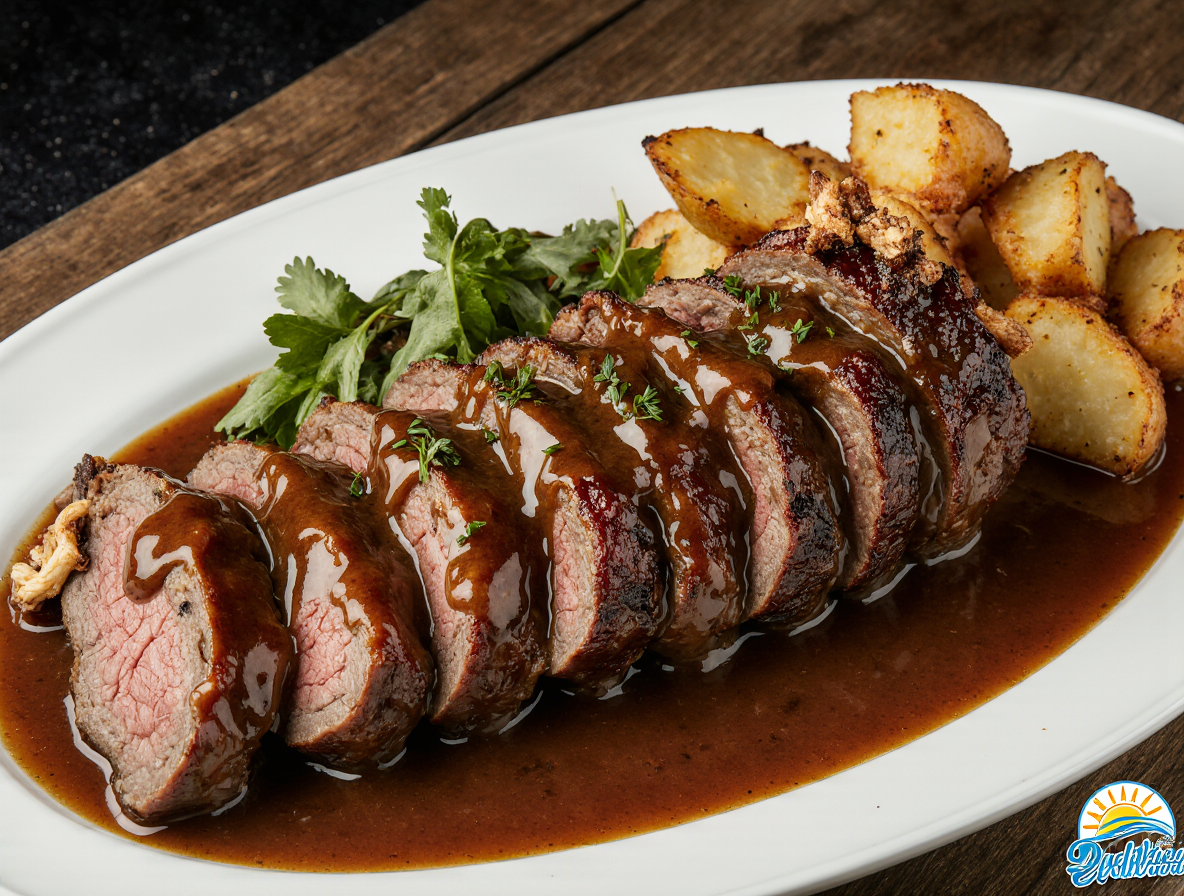
Roast Beef with Gravy stands as one of the most satisfying and timeless dishes you can prepare in your kitchen. The rich aroma of slow-roasted beef fills the air, creating anticipation long before the first slice hits the plate. This dish delivers tender, juicy meat paired with a deeply flavorful gravy that brings everything together. It suits both special gatherings and simple family dinners, offering comfort and elegance in every bite.
The beauty of this recipe lies in its simplicity and versatility. You can adjust the herbs, add vegetables like carrots and potatoes, or experiment with different cuts of beef to suit your preference. The homemade gravy elevates the dish, turning pan drippings into a silky, savory sauce that enhances every slice. Whether you serve it with mashed potatoes, rice, or crusty bread, this roast beef recipe guarantees a hearty and memorable meal every time.
Full Recipe:
Ingredients:
- 1.5 kg beef roast (chuck or sirloin)
- 2 tablespoons olive oil
- 4 cloves garlic, minced
- 1 tablespoon fresh rosemary, chopped
- 1 tablespoon fresh thyme, chopped
- 1 teaspoon salt
- 1 teaspoon black pepper
- 1 onion, sliced
- 2 cups beef broth
- 1 tablespoon Worcestershire sauce
- 2 tablespoons all-purpose flour
- 2 tablespoons butter
- Optional: carrots and potatoes for roasting
Directions:
- Preheat oven to 180°C (350°F).
- Pat the beef roast dry with paper towels and place it on a cutting board.
- In a small bowl, combine olive oil, garlic, rosemary, thyme, salt, and pepper.
- Rub the herb mixture evenly over the entire surface of the beef.
- Place the sliced onions at the bottom of a roasting pan and set the beef on top.
- Add beef broth and Worcestershire sauce into the pan.
- Cover loosely with foil and roast for 1 hour.
- Remove the foil and continue roasting for another 45 minutes to 1 hour, or until desired doneness.
- Remove the beef from the oven and let it rest for 15 minutes before slicing.
- While the beef rests, strain the pan juices into a saucepan.
- In another pan, melt butter over medium heat, then whisk in flour to form a roux.
- Slowly add the strained juices into the roux, whisking continuously until smooth and thickened.
- Simmer for 5–7 minutes and adjust seasoning if needed.
- Slice the roast beef and serve with warm gravy.
Prep Time: 20 minutes | Cooking Time: 2 hours | Total Time: 2 hours 20 minutes
Kcal: 480 kcal | Servings: 6 servings
The Ultimate Guide to Roast Beef with Gravy: A Timeless Comfort Dish
Roast beef with gravy stands as one of the most iconic and satisfying dishes you can serve at the table. This classic recipe delivers bold flavor, tender texture, and a sense of tradition that few meals can match. Whether you prepare it for a Sunday family dinner, a holiday feast, or a special occasion, roast beef never fails to impress. It combines simple ingredients with thoughtful technique, resulting in a dish that feels both rustic and elegant.
Many home cooks appreciate roast beef because it rewards patience and attention. You control the seasoning, the doneness, and the richness of the gravy. You also create an experience, not just a meal. The aroma of herbs and roasting meat fills the kitchen, building anticipation long before serving time. When you slice into the roast and drizzle it with silky gravy, you bring comfort and satisfaction to everyone at the table.
Why Roast Beef with Gravy Remains a Classic Favorite
Roast beef has earned its place in culinary traditions across many cultures. People value it for its simplicity, versatility, and ability to feed a crowd. You can prepare it with minimal ingredients, yet still achieve deep, complex flavor. The roasting process enhances the natural taste of the beef, while the gravy adds richness and depth.
Unlike complicated recipes that rely on many steps or specialty ingredients, roast beef focuses on technique. You season the meat well, cook it at the right temperature, and allow it to rest properly. These steps ensure tenderness and flavor. The gravy then transforms the pan drippings into a luxurious sauce that ties the entire dish together.
You can also adapt roast beef to suit different preferences. Some cooks prefer a herb-crusted roast, while others choose a simpler salt-and-pepper approach. You can serve it with vegetables, potatoes, rice, or bread. This flexibility makes it a reliable choice for both everyday meals and celebrations.
Choosing the Right Cut of Beef
Your choice of beef cut plays a major role in the final result. Each cut offers a different balance of tenderness, flavor, and fat content. Understanding these differences helps you select the best option for your needs.
Chuck roast works well for slow roasting because it contains more connective tissue. As it cooks, the tissue breaks down and creates a tender, flavorful result. This cut suits those who enjoy a rich, hearty texture.
Sirloin roast offers a leaner option. It cooks faster and delivers a slightly firmer texture. Many cooks choose sirloin when they want a balance between tenderness and structure.
Rib roast, often called prime rib, delivers the most luxurious experience. It contains more marbling, which creates incredible flavor and juiciness. This cut works best for special occasions when you want to impress guests.
Round roast provides a budget-friendly option. It contains less fat, so you must pay close attention to cooking time and temperature. Proper seasoning and careful slicing help you achieve a satisfying result.
The Importance of Seasoning
Seasoning defines the flavor of your roast beef. You should never rush this step. A simple blend of salt, pepper, garlic, and herbs can transform a basic cut of meat into something extraordinary.
Salt enhances the natural flavor of the beef. It also helps create a beautiful crust during roasting. Apply salt evenly and allow it to penetrate the meat before cooking.
Fresh herbs like rosemary and thyme add depth and aroma. They complement the richness of the beef without overpowering it. Garlic provides a savory backbone that ties everything together.
You can also experiment with additional flavors. Paprika adds warmth, while mustard powder introduces a subtle tang. Worcestershire sauce brings umami and complexity. Each addition should support the beef, not overshadow it.

Mastering the Roasting Process
Roasting requires attention to detail. You need to balance temperature, timing, and technique to achieve the perfect result. Start by preheating your oven to ensure even cooking from the beginning.
Searing the beef before roasting adds an extra layer of flavor. This step creates a caramelized crust that enhances both taste and texture. You can sear the meat in a hot pan with oil before transferring it to the oven.
Place the beef on a rack inside the roasting pan. This setup allows heat to circulate evenly around the meat. It also prevents the bottom from becoming soggy.
Use a meat thermometer to monitor doneness. This tool removes guesswork and helps you achieve your preferred level of doneness. For medium-rare, aim for an internal temperature of about 57–60°C (135–140°F). For medium, aim for 63–68°C (145–155°F).
Why Resting the Meat Matters
Resting the roast after cooking plays a crucial role in achieving juicy, tender slices. When the meat cooks, its juices move toward the center. If you cut it immediately, those juices escape and leave the meat dry.
Allow the roast to rest for at least 15–20 minutes. During this time, the juices redistribute throughout the meat. This process ensures each slice remains moist and flavorful.
Cover the roast loosely with foil while it rests. This step helps retain warmth without trapping too much steam, which could soften the crust.
Creating Rich, Flavorful Gravy
Gravy transforms roast beef into a complete dish. It captures the essence of the roast and adds a smooth, savory finish. You create gravy using the drippings left in the roasting pan, which contain concentrated flavor.
Start by straining the drippings to remove excess fat and solids. Then prepare a roux by cooking butter and flour together. This mixture forms the base of your gravy and provides thickness.
Slowly add the drippings to the roux while whisking constantly. This technique prevents lumps and ensures a smooth texture. Simmer the mixture until it thickens to your desired consistency.
Taste the gravy and adjust the seasoning. You can add salt, pepper, or a splash of Worcestershire sauce for extra depth. The final result should feel rich, balanced, and deeply satisfying.
Perfect Side Dishes to Serve
Roast beef with gravy pairs beautifully with a variety of side dishes. These accompaniments enhance the meal and create a well-rounded dining experience.
Mashed potatoes remain the most popular choice. Their creamy texture complements the richness of the gravy. You can also serve roasted potatoes for a crispier alternative.
Steamed or roasted vegetables add color and freshness. Carrots, green beans, and broccoli work especially well. They provide contrast to the hearty beef.
Rice offers a simple and versatile option. It absorbs the gravy and creates a comforting base for the meal. Crusty bread also works well, allowing diners to soak up every drop of sauce.
Tips for Achieving the Best Results
Consistency matters when preparing roast beef. Follow these practical tips to improve your results every time:
- Bring the beef to room temperature before cooking. This step ensures even roasting.
- Use a thermometer instead of relying on cooking time alone.
- Avoid overcooking, as it can dry out the meat.
- Slice the beef against the grain to maximize tenderness.
- Save leftovers for sandwiches, salads, or stir-fries.
Each of these tips helps you refine your technique and create a better final dish.
Variations You Can Try
Roast beef allows for creativity. You can adapt the recipe to suit different tastes and occasions.
For a garlic lover’s version, increase the amount of garlic and add roasted garlic to the gravy. This approach creates a bold, savory flavor.
For a wine-infused variation, add red wine to the pan drippings before making the gravy. The wine adds richness and complexity.
For a spiced version, include paprika, cumin, or black pepper in the seasoning blend. This twist introduces warmth and depth.
You can also experiment with marinades. A mixture of soy sauce, garlic, and herbs can infuse the meat with additional flavor before roasting.
Storage and Reheating Tips
Proper storage helps you enjoy roast beef even after the main meal. Allow the meat to cool completely before storing it in an airtight container. Keep it in the refrigerator for up to three days.
When reheating, use low heat to prevent the meat from drying out. Add a bit of broth or gravy to maintain moisture. Cover the dish to trap steam and preserve tenderness.
You can also freeze roast beef for longer storage. Wrap it tightly and store it for up to three months. Thaw it in the refrigerator before reheating.
Why This Dish Works for Any Occasion
Roast beef with gravy fits a wide range of occasions. It works just as well for a casual family dinner as it does for a festive celebration. Its versatility makes it a dependable choice for any host.
You can prepare it ahead of time and focus on other aspects of your meal. It also scales easily, allowing you to serve small or large groups without difficulty.
The presentation adds to its appeal. A beautifully sliced roast with glossy gravy creates an inviting centerpiece that draws everyone to the table.
Conclusion
Roast beef with gravy delivers everything you want in a meal: flavor, comfort, and satisfaction. It combines simple ingredients with careful technique to create something truly memorable. When you choose the right cut, season it well, and cook it with attention, you unlock the full potential of this classic dish.
The process may seem straightforward, but each step contributes to the final result. From selecting the beef to preparing the gravy, you shape the outcome with every decision. This level of control allows you to tailor the dish to your taste and create a meal that feels personal and rewarding.
As you continue to refine your approach, you will discover new ways to enhance the flavor and presentation. Roast beef with gravy will never lose its charm because it connects tradition with creativity. Serve it with pride, share it with others, and enjoy the timeless satisfaction it brings to the table.





Leave a Reply