
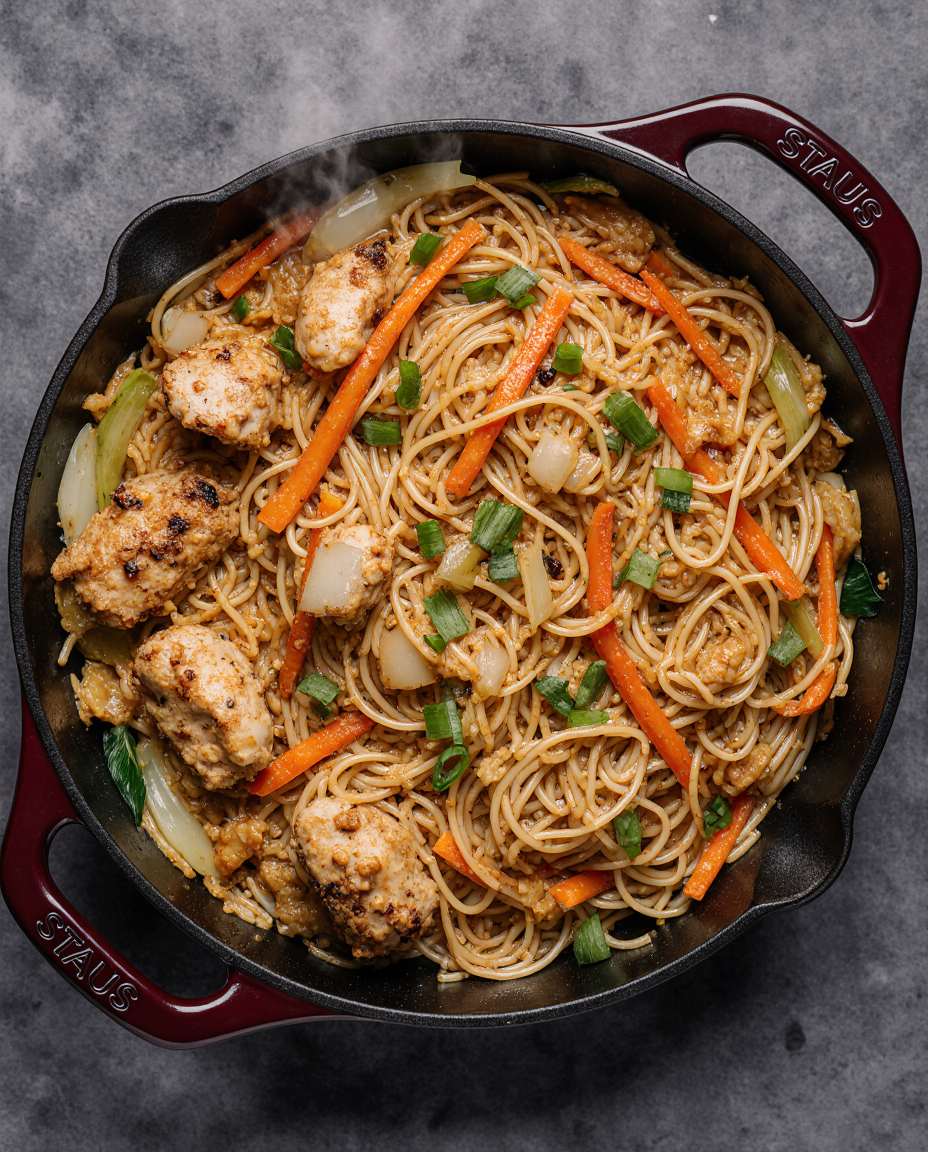
Chicken Chow Mein is the perfect balance of savory, satisfying, and fresh. Tender pieces of chicken are tossed with silky noodles and crisp vegetables, all coated in a rich, umami-packed sauce. Each bite offers texture and flavor, from the crunch of cabbage and carrots to the smoothness of the noodles infused with garlic and ginger.
This dish is ideal for busy weeknights when you want something comforting yet quick. It’s incredibly versatile — swap in shrimp or beef, add bean sprouts or snap peas, or adjust the sauce to your taste. Whether served straight from the wok or plated beautifully for guests, Chicken Chow Mein brings restaurant-quality flavor right into your home kitchen.
Full Recipe:
Ingredients:
- 8 oz chow mein noodles (or thin spaghetti)
- 2 cups cooked chicken breast, shredded or sliced
- 2 tablespoons vegetable oil
- 2 cups green cabbage, finely shredded
- 1 cup carrots, julienned
- 1/2 cup green onions, chopped
- 2 cloves garlic, minced
- 1 tablespoon fresh ginger, grated
For the Sauce:
- 1/4 cup low-sodium soy sauce
- 2 tablespoons oyster sauce
- 1 tablespoon hoisin sauce
- 1 teaspoon sesame oil
- 1 tablespoon cornstarch
- 1/2 cup chicken broth
- 1 teaspoon sugar
- 1/4 teaspoon black pepper
Directions:
- Cook the chow mein noodles according to package instructions until al dente. Drain and set aside.
- In a small bowl, whisk together soy sauce, oyster sauce, hoisin sauce, sesame oil, cornstarch, chicken broth, sugar, and black pepper. Set aside.
- Heat 1 tablespoon of vegetable oil in a large wok or skillet over medium-high heat.
- Add garlic and ginger; sauté for 30 seconds until fragrant.
- Add cabbage and carrots. Stir-fry for 2–3 minutes until slightly tender but still crisp. Remove vegetables from the pan and set aside.
- Add remaining oil to the pan. Add chicken and cook for 2–3 minutes until heated through.
- Return vegetables to the wok and add the cooked noodles.
- Pour the sauce over the mixture and toss everything together. Stir-fry for 2–3 minutes until the sauce thickens and evenly coats the noodles.
- Stir in green onions and remove from heat. Serve hot.
Prep Time: 15 minutes | Cooking Time: 15 minutes | Total Time: 30 minutes
Kcal: 420 kcal | Servings: 4 servings
The Ultimate Guide to Homemade Chicken Chow Mein
Chicken Chow Mein is one of those universally loved dishes that bridges cultures, comfort, and convenience. It’s a staple on takeout menus across the world, yet when prepared at home, it transforms into something even more special. The balance of tender chicken, crisp vegetables, silky noodles, and a savory, umami-rich sauce creates a deeply satisfying experience that feels both indulgent and nourishing.
What makes this dish truly remarkable is its adaptability. Whether you are cooking for a busy weeknight dinner, meal prepping for the week, or hosting friends for a casual gathering, Chicken Chow Mein rises to the occasion. It’s quick, approachable, and endlessly customizable while still delivering that authentic stir-fry flavor people crave.
In this comprehensive guide, we’ll explore everything that makes Chicken Chow Mein exceptional — from its origins and ingredients to cooking techniques, ingredient swaps, nutritional benefits, storage tips, and presentation ideas.
The Origins of Chow Mein
Chow Mein originates from Chinese cuisine, specifically Cantonese cooking. The term “chow mein” translates to “stir-fried noodles.” Over time, the dish evolved as Chinese immigrants adapted recipes to locally available ingredients in different parts of the world. As a result, there are now several regional interpretations, including American-Chinese versions that tend to be slightly sweeter and saucier.
Traditional Cantonese Chow Mein often uses thin egg noodles that are either soft or pan-fried until crispy. In Western adaptations, the soft noodle version is more common — the kind that’s tossed with chicken and vegetables in a savory brown sauce.
Understanding the roots of this dish adds a layer of appreciation. It’s not just a quick dinner option; it’s a meal with history, cultural depth, and global influence.
Why Homemade Chicken Chow Mein Is Better Than Takeout
While takeout is convenient, homemade Chicken Chow Mein offers several advantages:
1. Control Over Ingredients
When you cook at home, you control the quality and quantity of each ingredient. You can use lean chicken breast, organic vegetables, and low-sodium sauces. This significantly reduces excess oil, salt, and additives commonly found in restaurant versions.
2. Customizable Flavor
Prefer a little extra garlic? Love a stronger sesame flavor? Want it spicier? At home, you can tailor the sauce precisely to your taste.
3. Fresher Vegetables
Restaurant stir-fries can sometimes overcook vegetables. Cooking at home ensures your cabbage, carrots, and green onions remain crisp and vibrant.
4. Cost-Effective
Feeding a family of four with takeout can be expensive. Homemade Chow Mein costs a fraction of the price while yielding generous portions.
5. Healthier Option
By adjusting oil levels and sodium, you can turn this into a balanced meal that’s satisfying without being heavy.
Key Ingredients That Make This Dish Shine
Chicken
Boneless, skinless chicken breast is most commonly used because it’s lean and cooks quickly. However, chicken thighs provide a richer flavor and slightly juicier texture. Either option works beautifully depending on preference.
Noodles
Traditional chow mein noodles are wheat-based egg noodles. If you can’t find them, thin spaghetti is a reliable substitute. The goal is a noodle that holds sauce well without becoming mushy.
Cabbage
Cabbage is the backbone vegetable of Chicken Chow Mein. It adds crunch, volume, and mild sweetness that balances the savory sauce.
Carrots
Julienned carrots provide color, texture, and a subtle sweetness.
Green Onions
These add brightness and freshness at the end of cooking.
Garlic and Ginger
This aromatic duo forms the foundation of flavor. Freshly minced garlic and grated ginger elevate the dish from simple to extraordinary.
The Sauce
The sauce typically combines soy sauce, oyster sauce, hoisin sauce, sesame oil, chicken broth, and cornstarch. Together, they create a glossy, savory coating that clings perfectly to the noodles.
The Secret to Perfect Stir-Fry Texture
The magic of Chicken Chow Mein lies in texture contrast. Achieving this requires a few important techniques:
High Heat Cooking
Stir-frying should happen over medium-high to high heat. This allows ingredients to cook quickly without becoming soggy.
Avoid Overcrowding
Cooking too much at once lowers the pan’s temperature. Work in batches if necessary.
Cook Ingredients Separately
Vegetables and chicken are often cooked separately before being combined. This ensures each component reaches its ideal texture.
Sauce at the End
Adding the sauce too early can cause vegetables to overcook. Toss everything together briefly at the end for best results.
Nutritional Profile and Health Benefits
Chicken Chow Mein can absolutely fit into a balanced lifestyle.
Lean Protein
Chicken provides high-quality protein that supports muscle maintenance and satiety.
Fiber-Rich Vegetables
Cabbage and carrots add fiber, which supports digestion and fullness.
Balanced Macronutrients
With protein, carbohydrates, and healthy fats from sesame oil, this dish offers a well-rounded nutrient profile.
Portion Control Friendly
Serve it with extra vegetables or pair with a side salad for an even lighter meal.
By using low-sodium soy sauce and moderate oil, you can make this dish heart-health conscious without sacrificing flavor.
Variations to Keep It Exciting
One of the most exciting aspects of Chicken Chow Mein is how easily it adapts.
Protein Swaps
- Shrimp Chow Mein
- Beef Chow Mein
- Tofu Chow Mein
- Pork Chow Mein
Vegetable Additions
- Bean sprouts
- Snap peas
- Bell peppers
- Bok choy
- Mushrooms
- Broccoli
Spice Boost
Add chili paste, red pepper flakes, or a drizzle of chili oil for heat.
Low-Carb Option
Substitute noodles with zucchini noodles or shredded cabbage for a lighter version.
Gluten-Free Version
Use gluten-free tamari instead of soy sauce and gluten-free noodles.
How to Serve Chicken Chow Mein
Presentation matters, especially if you’re sharing this dish on your website or serving guests.
Family Style
Serve directly from a large wok or skillet in the center of the table.
Individual Bowls
Top each serving with extra green onions or sesame seeds.
With Sides
Pair with:
- Egg rolls
- Steamed dumplings
- Hot and sour soup
- A simple cucumber salad
For a complete dinner experience, serve alongside jasmine rice or fried rice for larger appetites.
Storage and Meal Prep Tips
Chicken Chow Mein is excellent for leftovers.
Refrigeration
Store in an airtight container for up to 4 days.
Reheating
Reheat in a skillet with a splash of chicken broth to restore moisture.
Freezing
While possible, noodles can soften upon thawing. For best results, consume fresh or refrigerated.
Meal Prep
Divide into individual containers for easy grab-and-go lunches.
Common Mistakes to Avoid
Even a simple dish like Chicken Chow Mein can go wrong without proper technique.
- Overcooking the noodles
- Using too much sauce
- Not drying noodles properly before stir-frying
- Cooking vegetables too long
- Skipping aromatics
Paying attention to these small details makes a noticeable difference.
Why This Recipe Is Perfect for Busy Families
Chicken Chow Mein checks every box for a weeknight dinner:
- Ready in about 30 minutes
- Uses simple pantry ingredients
- Kid-friendly flavors
- Easy to double for larger groups
- Minimal cleanup
It’s a dependable meal that feels special without requiring hours in the kitchen.
Flavor Pairing Ideas
To enhance the experience, consider these additions:
- A drizzle of chili oil for heat
- A splash of rice vinegar for brightness
- Toasted sesame seeds for nuttiness
- Fresh cilantro for herbal notes
Each element adds dimension while maintaining balance.
The Cultural Appeal of Stir-Fry Dishes
Stir-frying is more than a cooking method; it’s a philosophy centered on speed, freshness, and balance. It preserves the integrity of ingredients while creating bold flavor combinations.
Chicken Chow Mein embodies this approach perfectly. Every component retains its character, yet together they form a cohesive, harmonious dish.
Tips for Restaurant-Quality Results at Home
If you want that authentic, slightly smoky “wok hei” flavor:
- Use a wok if possible
- Preheat thoroughly
- Avoid overcrowding
- Stir constantly
- Cook quickly
These techniques mimic professional kitchen conditions.
Making It Your Signature Dish
Once you’ve mastered the basics, personalize your Chicken Chow Mein:
- Develop a secret sauce ratio
- Add a unique garnish
- Use locally sourced vegetables
- Experiment with infused oils
Over time, this dish can become your household favorite — the one friends and family request repeatedly.
Conclusion
Chicken Chow Mein is far more than just a takeout classic. It’s a versatile, flavor-packed dish rooted in tradition yet adaptable to modern kitchens. Its combination of tender chicken, crisp vegetables, and savory noodles makes it universally appealing, while its simplicity makes it accessible to cooks of all skill levels.
When prepared at home, it becomes fresher, healthier, and more customizable than any restaurant version. From weeknight dinners to meal prep solutions, it offers convenience without compromising taste. With thoughtful technique and quality ingredients, Chicken Chow Mein can easily become a staple in your culinary repertoire.
Whether you’re recreating nostalgic takeout memories or discovering this dish for the first time, one thing is certain — homemade Chicken Chow Mein delivers comfort, flavor, and satisfaction in every single bite.




Leave a Reply